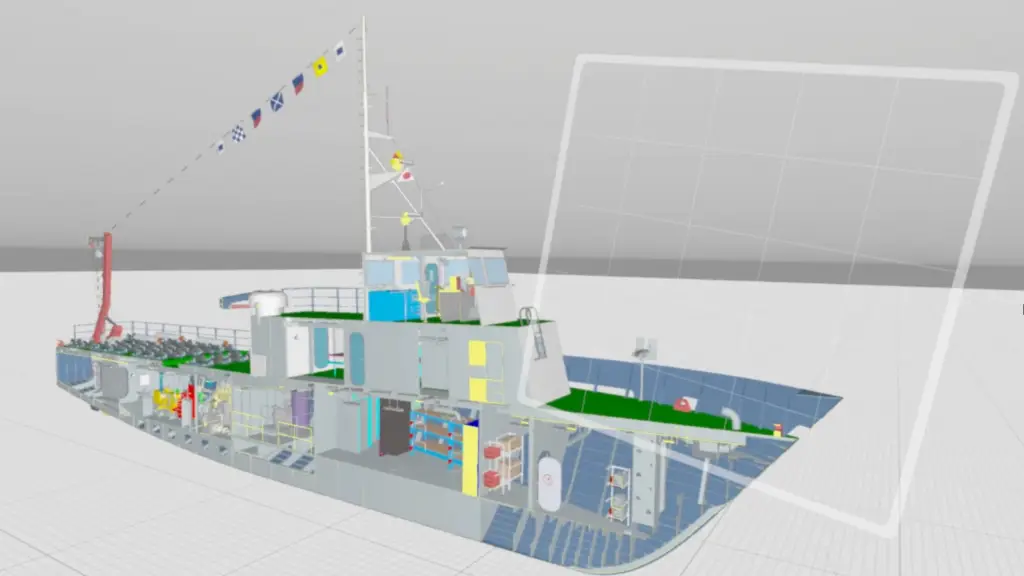
Collaborative CAD Design Review
Company: Masters of Pie | Client: Siemens PLM global OEM
After establishing a global OEM agreement with Siemens to embed our Radical SDK, a collaborative virtual reality platform, into their flagship CAD software NX, I managed the development and delivery of 3 releases of the Radical SDK for the Siemens NX development team. This included leading a cross-functional team comprising product, design, and engineering, as well as long-term OEM customer management. Through the global OEM agreement, we were utilised by over 200 Siemens customers worldwide, including NASA, Apple, and Rolls-Royce.

“We hold secure data for defence, and also ITAR Data for CIVIL, along with highly sensitive IP data for both. We do not wish to constantly extract the data from our enterprise class systems in order to view our data in VR/AR/MR scenarios, which would clearly bypass our security principles. Therefore our absolute need is to be able to integrate your Radical platform into the rest of our PLM system”
Rolls Royce IT Lead Architect
The cost of errors in the life of a product (from concept to being rolled out to customers) increases dramatically if they are not caught before the manufacturing stage, often costing in the millions to fix.
The rise of digital twins enables designers and engineers to test and validate products before they enter the costly manufacturing phase, and so tools that can allow a superior understanding of the 3D data can give demonstrable value.
However, these tools have to meet the stringent data security requirements of Siemens customers. This was achieved by virtue of the embedded OEM. By having the Radical SDK embedded within the CAD software already used by Siemens customers, they could enjoy the benefits of a collaborative virtual environment but maintain data security, as any data flow would only happen within their own on-prem networks and authoring software.
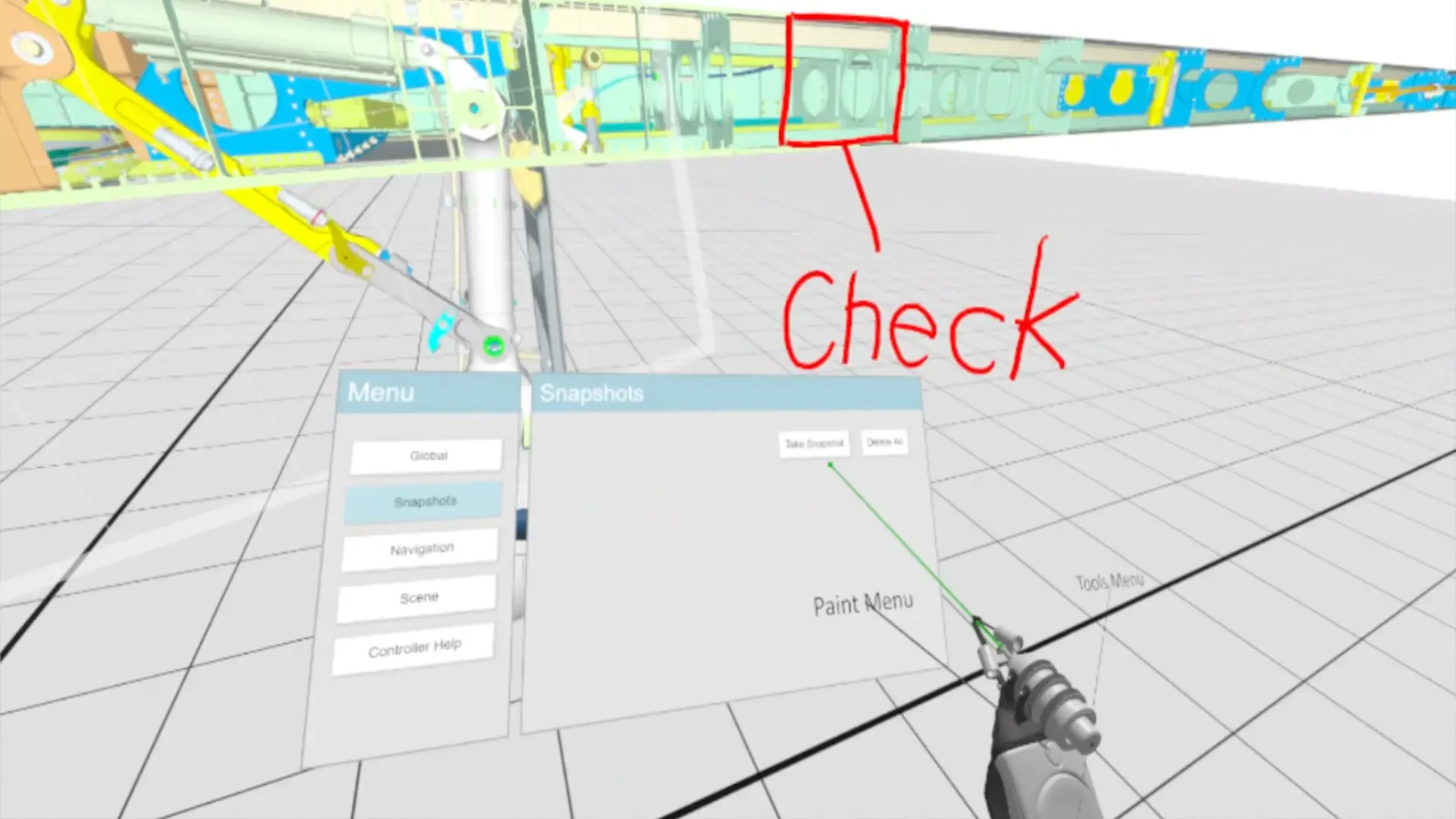
To make it as simple as possible to jump into a virtual session we developed a system whereby a simple click of the “GO VR” button and the sharing of a link (think Google Meet) could, in under a minute, have you collaborating remotely on the design with your colleagues from all over the world.
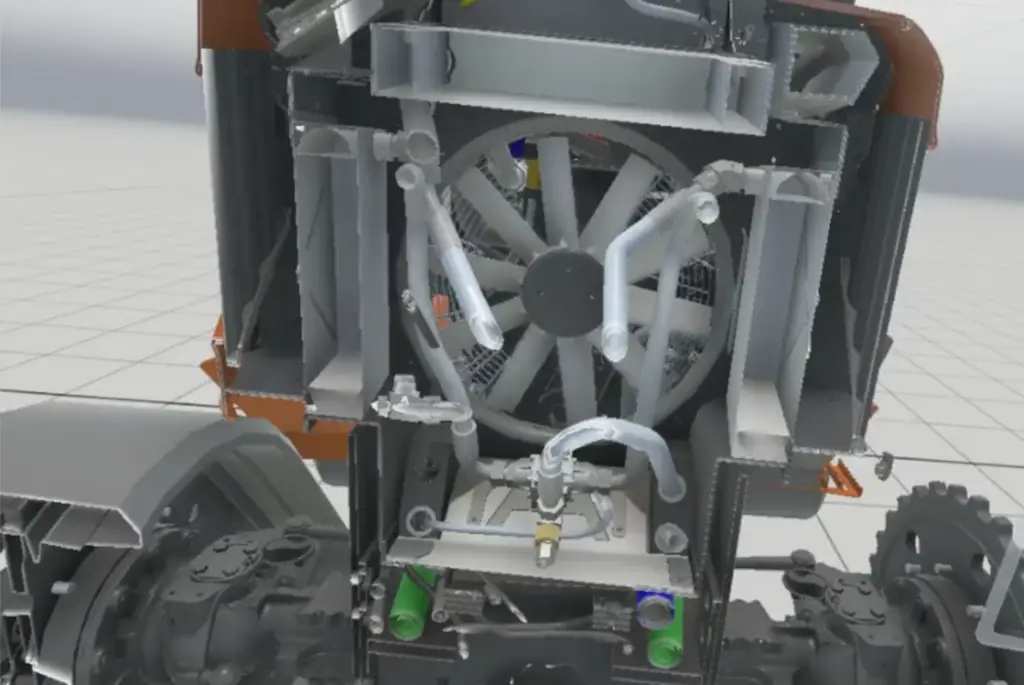
In addition, within the VR, you have a suite of tools from cross-sectioning (bottom right image) to selection and hiding of meshes in our virtual room. Another useful tool was measurement, which had to be designed in a very specific way. When the 3D data is translated from the CAD package into the real-time 3D VR environment mesh topology is created, which, whilst precise, does not match the mathematical precision designers enjoy within the CAD environment. To overcome this, any measurement created in the VR environment would then be measured in the CAD environment to maintain precision and display the results to the VR users. This removed the need for device hopping from desktop to VR, so users could take full advantage of seeing and collaborating with their designs in virtual reality.
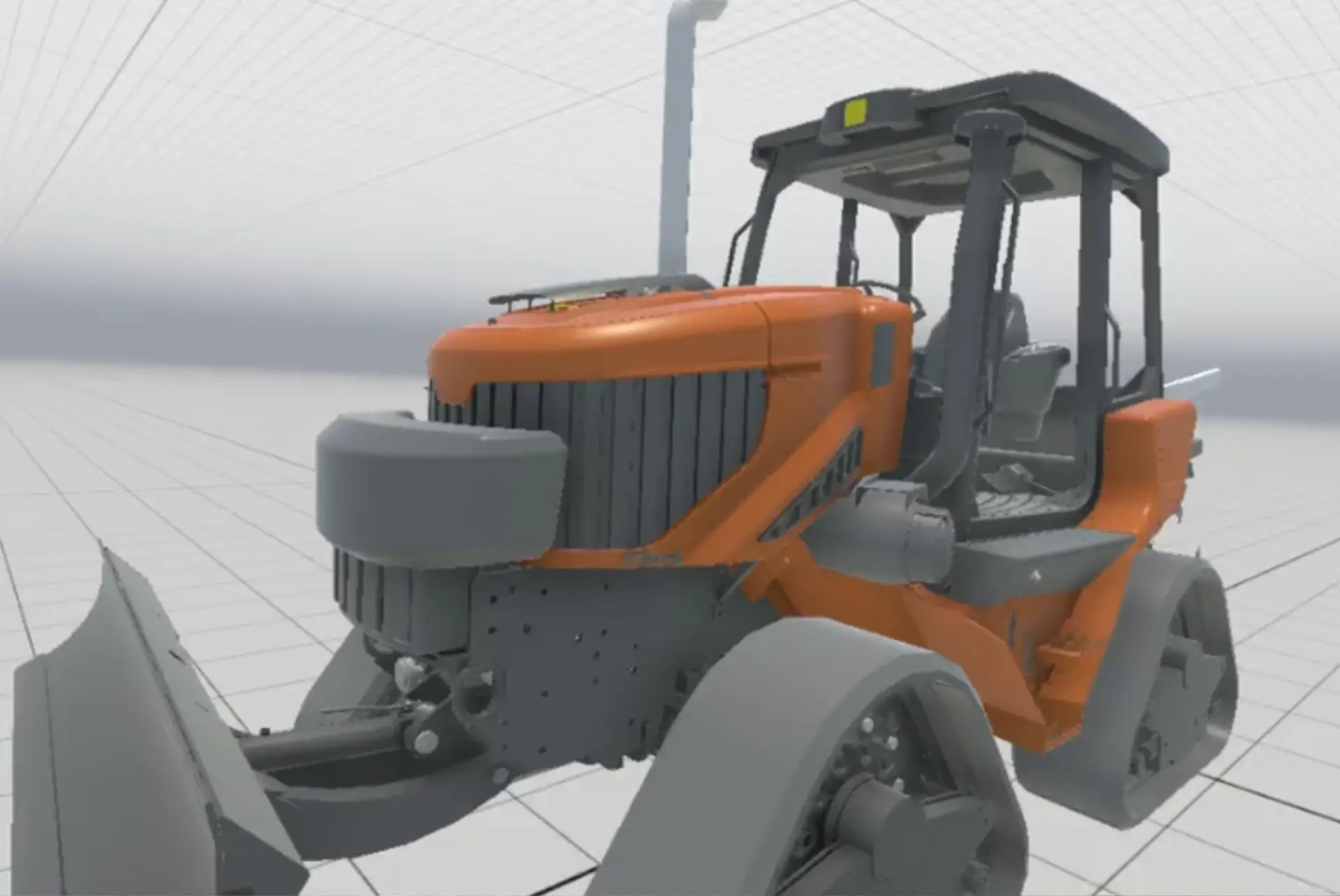
So why is viewing 3D data better in a spatial environment such as VR? The reason is that you cannot truly appreciate scale and dimension from just a flat screen. Much like using a map to abstract the geographical features of our surroundings, working with 3D on “pancake” 2D screens requires significant training. In a virtual environment, we can simply walk around the 3D data instead of needing to crop, tumble (rotate or pan). Giving us a far superior understanding of the data set as a designer and reducing the barrier for non-engineers (like 3rd party suppliers or customers) to get “up close and personal” with their products.